

The Glasgow & Edinburgh Branches Blog. Towards a better understanding of the world, in order to change it.
Saturday, August 13, 2022


Friday, August 12, 2022


Thursday, August 11, 2022
.png)

Wednesday, August 10, 2022


Tuesday, August 09, 2022


Monday, August 08, 2022
Our Debate with James Maxton,
On Wednesday, May 23rd, 1928, a well-attended debate was held between J. Maxton, M.P., representing the I.L.P., and J. Fitzgerald, representing the S.P.G.B. Mr. Chapman Cohen, Editor of Freethinker, took the chair. The subject was “Which Party Should the Working Class Support, the I.L.P. or the SPGB?”
J. Fitzgerald spoke for the first half-hour. He began by defining terms. By working class is meant those who depend upon the sale of their services for their living. By the capitalist class is meant those persons who buy the services of the workers. Capital does not mean merely wealth used for the production of further wealth, but wealth invested for the purpose of obtaining a nett surplus, called interest. This is the view not only of a Socialist, Marx, but also of capitalist economists like Bohm-Bawerk. Wealth is the product of the application of human energies to Nature-given material. The capitalist purchases the mental and physical energies of the workers, and after the payment of all expenses, he retains the nett surplus. The workers may not use the machinery of production — land, railways, factories, etc. — without the permission of the capitalists who own these things. The lives of the workers are under the control the capitalists who own their means of living. The workers are a slave class — wage-slaves.
How the workers are enslaved.
The armed forces of society — the police, the army, the air force, the navy, etc. — are under the control of the capitalist class. These armed forces are provided for annually by Parliament. Those who control Parliament control the armed forces by which they retain control of the means of wealth production. The capitalists and their agents are voted into Parliament at each election by the workers, who form the bulk of the electors. The only way to secure the “emancipation of the workers” is, first, to obtain control of the political machinery. When the workers want Socialism they can, through the vote, secure this control.
Is there wealth enough?
It is not true that the means of wealth production are inadequate. In spite of a million or more unemployed and of the waste of capitalist production, markets are overstocked, and combines are compelled to limit production in almost every industry. Five firms are reported by an American Government report to control half of the food supply of the world. In face of this, little reforms of capitalism are futile. The social ownership of the means of wealth production is the only remedy and can be secured only by the workers taking control of the political machinery.
Where does the I.L.P. stand?
I.L.P. leaders, at times, deny the existence of the class struggle. Keir Hardie and Ramsay MacDonald both did this.
Mr. Maxton's Case.
J. Maxton said that he was disappointed because he felt that he entirely agreed with the case put forward by his opponent. This statement of Socialist first principles was unassailable. The definitions were clear and correct. He accepted absolutely the diagnosis given. The workers accept capitalism and believe that the capitalists are a superior and necessary class. The only remedy is for the workers to awaken to the loss they suffer in being deprived of the necessities and luxuries of life. The problem before the Socialist is to awaken the worker to his subject position in society. The justification for this debate is that it may help towards this awakening and also that it may help towards achieving unity of working-class forces.
Points of Difference.
He had great difficulty in finding points of difference. Mr. J. Fitzgerald had quoted certain leaders of the I.L.P., but he, Mr. Maxton, held that he is the present leader of the I.L.P. and could speak on their behalf. It was not fair to quote against him statements made by someone else in 1902. He did not believe in those statements quoted. He fully accepted the theory of the class struggle and the necessity of basing Socialist tactics on that theory. He definitely repudiated the application of biological theories to politics and social questions.
The first necessity of an effective working-class organisation is the possession of a clear aim and policy. He and his opponent are equally doing the necessary propaganda. He denied that any Socialist organisation had done propaganda work equal in quality and quantity to the I.L.P.
I.L.P. Propaganda
Socialist propaganda must be delivered in a way understandable by the average worker. This the I.L.P. had done. It must be related to the circumstances of the ordinary worker’s life. The I.L.P. had pointed out to the workers the outstanding evils which are the effects of capitalism, but they did not believe that by these means they were abolishing capitalism. Psychologically that is the sounder method of approach to the workers, to awaken them to the realities of capitalism. But propaganda is not enough. The way to freedom is by the capture of political power. He and his opponent agreed on this also. He, however, thought there might be a point of difference. The I.L.P. said that it was necessary to start now capturing political power. It was needful to gather together into one great organisation – the Labour Party – all working-class organisations. To this end the I.L.P. fought elections challenging all capitalist candidates. Year by year they had increased in representation in the House of Commons. To-day there are far more representatives of the working class than ever before. He challenged contradiction on that. He agreed that a working-class party must have no other object than the establishment of Socialism. The I.L.P. seeks to induce the Labour Party to accept Socialism as its object. They wanted to give the Labour Party a clear majority in the House. All of this kind of work went on side by side in the: I.L.P.
The Labour Party and Socialism.
The I.L.P. has formed the Labour Party and got it to accept Socialism. It was now the task of the I.L.P. to lay down these steps to be taken to secure Socialism. This was the purpose of its “Socialism in Our Time” policy.
He cast no reflection on any working class organisation. He appreciated the Fabians, the S.P.G.B., and also the Communist Party.
Fitzgerald replies.
He pointed out that while Mr. MacDonald applied the theory of uninterrupted evolution to society, the son of Charles Darwin had shown that the Marxian view of social development by revolution is correct.
The debate was not between two individuals but between two parties. Mr. MacDonald only this year had written that poverty is largely the result of the pressure of population on the means of subsistence. This was untrue when Malthus said it in the eighteenth century, and is untrue to-day.
Right from its inception the I.L.P. urged the workers to put political power into the hands of the capitalist class.
In the New Leader for April 13th Mr. Maxton said that he wanted to narrow the gulf between rich and poor. The Socialist wanted to abolish the gulf, not narrow it. The I.L.P. wanted to abolish the conception of master and servant, so do the Liberals. Capital – admitted by Mr. Maxton to be the means of robbing the workers – cannot be “communally-owned,” as is the object of the I.L.P. For 35 years, in Mr. Maxton’s words, the I.L.P. had fought for the living wage – and had not secured it.
The I.L.P. Programme.
The I.L.P. had recently run a competition for a Labour programme in the columns of the New Leader. One part was a minimum wage low enough not to bring Press opposition. This programme did not even refer to Socialism. It proposed nationalisation with compensation.
The War.
The War in 1914 brought to a focus the difference between the I.L.P. and the Socialist Party. In August, 1914, the S.P.G.B. declared plainly that the War was a capitalist war, in no way involving interests of the working class.
In August, 1914, in the Labour Leader Keir Hardie spoke of “our interests as a nation” being at stake. We, the workers, had no interest. Mr. Ramsay MacDonald in Parliament offered to support the War if the nation were in danger.
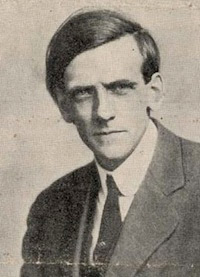
He could this time say that he faced points of difference, but he would repeat that he looked to the future, not the past. The statements quoted did not controvert the statement that the I.L.P. stood definitely against the War. He would challenge anyone to question his attitude or statements during the War. He was prepared to defend his own position. It must be common knowledge that Ramsay MacDonald is just as critical of the I.L.P. as Fitzgerald is, and the points he criticises are just the same. The I.L.P. wants Socialism, but what the workers want is a living wage. The fact that capitalism cannot provide this is the biggest propaganda point against capitalism.
The Gulf Between Rich and Poor.
In speaking of the narrowing of the gulf between rich and poor, he said, “narrowing to vanishing point “ – this was not reported in the New Leader. He denied that the Liberal Report asked for the abolition of the status implied by the terms master and servant. In Socialism, as the I.L.P. understood it, there would be no exploitation. He admitted that the word capital was carelessly used in the declaration of the objects of the I.L.P., but the workers are not interested in the splitting of hairs. He, Mr. Maxton, had himself carelessly talked of the public ownership of capital when he should have said the public ownership of the means of wealth production. But it is of no importance in the real work of Socialist education.
Practical Work.
The I.L.P. devotes its time to the practical work of building up an effective machine for the establishment of Socialism. The S.P.G.B., in laying down its general principles, was only saying something which would be agreed with by every member of the Parliamentary Labour Party from MacDonald downwards. The difference only begins when it is a question of practical work. The S.P.G.B. refuses to face up to its responsibilities. Socialism is a question of human will and human organisation. Socialism can be attained by violence or by the “inevitability of gradualness.” All depends on human will and human intelligence. It depends not on any god or other power outside ourselves.
Fitzgerald concludes.
He was not responsible for incorrect passages of Mr. Maxton’s speech quoted in the New Leader. The S.P.G.B. expelled those of its members who supported the War. The I.L.P. did not deal with its leading members who supported the War. When the I.L.P. misuses the word “capital” it misleads the working class. Of the 154 Labour M.P.s, 106 are members of the I.L.P., and the I.L.P. cannot therefore condemn the Labour Party without at the same time condemning itself. Under Socialism there is no question of remuneration. Money is a feature of private property systems. With Socialism it will not be needed. Where there is plenty for all there is no question of remuneration, equal or otherwise.
The final point was that any Party which urges the workers to place power in the hands of the master class is betraying the interests of the workers.
Mr. Maxton winds up.
Mr. Maxton gave a blank denial to the charge that the I.L.P. has supported, or is supporting, the enemies of the working class. Never has the Party supported other than Labour and Socialist candidates. He gave that on his personal word of honour. He had heard that there had been friendly understandings between Labour and Liberal candidates, but he had also heard the denial of these statements.
But again he would urge that stirring up garbage was no work for Socialists. Since 1911, when he commenced his active work, there had never been any bargaining.
He agreed that the I.L.P. had not expelled dissentient minorities except in one or two very extreme cases. But there must be immense toleration if we are to succeed in organising the working class. There must be give and take. In view of the time it takes to make a Socialist, we must not fling a man out for his first mistake. It was the choice between being a narrow sect and being an effective organisation. When Mr. Maxton made mistakes he wanted to be treated tolerantly and he would give others the same toleration. Expulsion must be used only in the most extreme cases. The greatest problem is not to get a few men with a narrow view of Socialism, but to get millions with a great determination and as much knowledge as can be given in the time available. He believed that the time is short before the majority make up their minds to have Socialism. The work rendered by the I.L.P. in the past has been a good and valuable contribution to the building up of the Socialist movement. The I.L.P. will play an important part in achieving Socialism, a work not for the I.L.P. or the S.P.G.B., but for the workers of the world.
Duplicitous Diplomacy

How easy it is for a ruling class and its supporters to sympathise with the victims of oppression by a rival ruling class. This kind of sympathy has nothing to do with socialism, or with solidarity for the international working-class. Crocodile tears are simply a part of diplomacy in a propaganda war.
Of course, as world socialists, we do not align ourselves with any leaders or any nationalist faction, taking no sides in their wars over territory; for we have the insight to see where disagreements over resources and artificial borders lead and in whose interests such conflicts are waged. Our thoughts lie with the exploited majority — the common folk—who continue to pay the price of power politics, and eagerly await the day when they have the chance, along with their counterparts the world over, to at last vote for themselves and, more, in their own interests, a world devoid of Putins and oligarchs and the misery their games bring.
It is the media’s job to wage an information campaign to make sure everyone’s ‘onside’. Capitalist propaganda is essentially about the power to make people believe that reality is not true. The physical war is combined with a psychological war. The message is drummed into people that “our” side has no choice but to defend ourselves against a foe bent on aggression, even genocide. The enemy leaders are demonised, depicted as deranged and if need be so will the ordinary people of an enemy nation.
Another aspect of media manipulation is that the workers’ attention is directed to securing an alteration in the distribution of wealth and not focusing on the method of production.
The method of production to-day is by means and instruments of production that are privately owned. By converting these privately-owned means into social property the workers will then reap the benefit of the energy they put into the production of wealth, and will also reap a good deal of much-needed leisure and freedom from worry.
Only a working class revolution can get rid of this system of mutual suspicion, rivalry and war.
Sunday, August 07, 2022
Comprehending Capitalism

Under capitalism, the workers always get the thick end of the stick. In some circumstances, the workers can use the weapon of strike action to defend their standards of living and even raise them. The only way the workers can bring about a lasting and worthwhile improvement in their conditions is to abolish capitalism and create, in its place, a socialist society.
A larger part of their own surplus-product, always increasing and continually transformed into additional capital, comes back to them in the shape of means of payment, so that they can extend the circle of their enjoyments, can make some addition to their consumption fund of clothes, furniture, etc., and can lay by small reserve funds of money.
But just as little as better-clothing, food, and treatment and a larger pecullium (Pecullium: pocket-money given to slave by master), do away with the exploitation of the slaves, so little do they set aside that of the wage-worker.
“A rise in the price of labour, as a consequence of accumulation of capital, only means, in fact, that the length and weight of the golden chain the wage-worker has already forged for himself, allow of a relaxation of the tension of it.” (Karl Marx,“ Capital,” Vol. 1)
Production is not carried on for the purpose of meeting people’s needs. The aim of production is to so arrange it that a profit is made in order that shareholders and bondholders may draw their dividends without needing to work. Hence the haves and the have-nots—the workers and the capitalists—those who must sell their physical and mental energies in order to get the wherewithal to meet their needs and those who can meet their needs without having to sell their energies.
Production today is for the market, and conditions in the market determine how, when, where and if a portion or all of the product will be sold. Conditions in the market can bring prosperity, financial difficulty, or even ruin to many producing concerns as crises of the past have borne witness. If one type of goods is produced too much in excess of what the market can absorb the competition to find buyers leaves some losers in the struggle, which appears to be what is happening in some industries to-day, like the motor industry. If the unsold surplus is large, or if there is an anticipation that this is going to happen, then there is a cut in production and workers are discharged. The strange part of it is that there can be a large unsold surplus of the very things that the mass of people are sorely in need of but cannot buy because of their limited resources. With only their wages to depend upon the workers are always on the side that loses when these troubles come.
Inflation is not the cause of poverty, though governments precipitate trouble by debasing the currency and issuing insufficiently backed current notes in the vain hope of getting out of financial difficulty—or just through plain ignorance.
Money is the medium of market dealings and products must be turned into money before profit, the object of market dealings, can be realised. Thus there is no way out of the crazy dilemma whilst buying and selling continues to be the means of transferring the product to the consumer. Whilst the means of production are privately owned by an individual, a company, or a State concern buying and selling will still go on. The answer, then, is to abolish this private ownership and substitute for it the common ownership of the means of production and distribution. When this is done human needs and not profit will be the aim of production and money, and all the evils associated with it, will disappear.
Political action is an absolute necessity to achieve socialism. This requires that socialists shall send their delegates to parliament and the local councils for the purpose of achieving socialism. It does not mean that parliament can impose socialism on a non-socialist electorate, or induce a non-socialist electorate to accept the socialism that they do not want or understand. The Socialist Party has no members in parliament only because there are too few socialists to send them there.
The Socialist Party does not support leadership. The essence of leadership is the implication that the workers can safely entrust their affairs, including their position under capitalism and the achievement of socialism, to elected or self-appointed individuals who will in their wisdom decide what to do and how to do it. The assumed justification for leadership is that the rank and file do not properly understand what are the problems and how they should be tackled. This is indeed true and will remain so until the workers become socialists and understand that their urgent need is socialism. Then they will know exactly what to do and will instruct their delegates accordingly. In the meantime the mass of the workers do not understand; but what of the labour leaders? What do they know of capitalism or socialism? And what difference would it make if they did have knowledge, since their continuance as leaders would depend upon suiting the lack of knowledge of their own followers?
The workers have so far always trusted in leaders. It has brought them lots of wars and other evils but no socialism; only the continuance of capitalism.
We don’t think a socialist party should seek passive support from people on the basis of what it would do for them if they voted for it. In fact you would seem to be more committed to the so-called “parliamentary road to socialism”—a majority of socialist MPs voting in socialism for a passive majority outside—than we would be. This is not how we see socialism coming about. Socialism is something people must do for themselves, organising themselves consciously and politically to establish it and actively participating in the movement. They alone can establish socialism using parliament with the socialist party merely an instrument to this end.
This is why we limit ourselves today to carrying out general agitation against capitalism and for socialism. We fully accept, however, that when the “critical mass” of socialists has been reached, people will be discussing all the issues you raise and working out detailed plans about how to tackle them once capitalism has been ended. But even then it won’t be a question of the socialist party presenting them with a programme for them to vote for, but of them democratically deciding for themselves, via the socialist party and other bodies such as trade unions, professional associations and neighbourhood committees, what the practicalities of establishing and running socialism in its first days should be.
Of course the relatively few of us who are socialists today do have our ideas on how education, transport, health services, etc might, and even should be, organised in a socialist society, but this is all they can be at the moment: ideas and suggestions. This is because the exact details will have to be decided by the people around at the time, most of whom are not yet socialists and who might, and probably will, have different ideas from us on the details of some of these issues.
We have, in fact, produced a pamphlet called Socialism As A Practical Alternative which does spell out some of the possibilities of socialism, particularly as regards possible institutions of democratic control and ways of organising the production and distribution (we prefer this word to “exchange” which has connotations of buying selling) of goods is a moneyless context. You should read it. We’ll be pleased to send you a copy for 80p (post paid).
As to leaflets, we’re sending you a selection. Please let us know which, and how many, you’d like. We’re also sending some stickers for your car.
The Socialist Standard is not written by professional journalists but by ordinary people who have a day job too. If we don’t publish our photos this is because the Socialist Party does indeed not believe in leaders or the cult of personality, but also because they are not just expressing personal views but are writing on behalf of the membership as a whole.
Saturday, August 06, 2022
Our Aim and Goal

It is not for the Socialist Party to describe in detail the social system that will arise following the establishment of common ownership of the means of production, for we cannot foretell what conditions will prevail at the time. All we can do is state the broad changes that we know must arise.
The most obvious is that the wages system would be abolished since nobody would be in a position to exploit labour power. With the instruments of production socially owned, no one would wish to sell their ability to work for another’s profit, even if a buyer could be found. The very conditions of wage labour — the divorce of the majority from the means of life — will have ceased to exist, and all forms of exchange would disappear.
Necessity alone will dictate industrial activity. If goods are produced in excess of demand, production will be curtailed; should needs be unsatisfied, production will increase. Individuals will determine their own needs, and society will devise means by which people can make their requirements known (not a difficulty, given computer technology). All who were capable would work to the best of their abilities and take freely from the social wealth. We do not accept that having opted for a non-coercive society, people will act against their own interests and refuse to co-operate in productive work.
The view that people are innately selfish is a fallacious one, fostered by the society in which we live. The concept of greed can only have meaning where access to wealth is restricted and scarcity is commonplace. Under capitalism, the ruthless pursuit of self-interest is encouraged; in socialism, it would be an absurdity. And even the pig will turn away from the trough when it can eat no more.
There is only one course, and that is to understand that the gigantic means of production, which the workers operate to turn out wealth in abundance, must become the common property of society, to be used in the interest of the whole of society instead of in the interest of the capitalist class as at present.
Many critics of the Socialist Party assume that revolution implies violence and that since we do not advocate violence, therefore we are not revolutionary. This is an assumption which will not bear examination. The Socialist Party aims at changing the foundation of society, replacing the private ownership of the means of production with common ownership. It is therefore a revolutionary party. Conversely, the use of violent methods to secure minor reforms does not turn a reformist party into a revolutionary one.
The Socialist Party lays it down that socialism pre-supposes the conquest of the powers of government and the conversion of the machinery of government, including the armed forces, from “an instrument of oppression into the agent of emancipation.” We lay it down, further, that the vote is the only means open to the workers in developed capitalist countries to conquer the powers of government.
Friday, August 05, 2022
Organising for Revolution

The propertied class will, under pressure, do various small things to meet working-class discontent, but they will never get off the workers’ backs until a majority determines to have socialism. Our future world will be very much like the dystopian world that we live under now unless the working-class chooses otherwise.
During humanity's early history, when society was in the stage of primitive communism, there were no classes and no class struggles. Then—and the period must have lasted for thousands of years—private property was unknown, all members of the tribe joining in the ownership of the hunting grounds and fishing waters. The proceeds of the chase were for the enjoyment of every member of the tribe. Thanks to this ownership in common there was no monopolising of resources and wealth by one section of the community to the detriment of another. No person could live by the exploitation of others. Agriculture and the domestication of animals brought to an end this first stage of mankind’s history. Now tribes conquered others with the express purpose of converting the vanquished into slaves. They were brought home and set to work on the fields The conquerors owned the animals and the land; the conquered were propertyless. Thus did private property arise and with it came classes and man’s exploitation by man. Since that time the history of all society is the history of class struggles, a conflict between the “haves” and the “have-nots.” With the advent of private property and farming, came more permanent dwelling places, and exchange of products, the domination of tribe by tribe, and the growth of privileged and ruling classes. Whereas formerly man’s struggle for existence represented a unified battle against the elements, the fight for survival now took the form of man against man, class against class, state against state. No longer did men and women live a harmonious and cooperative life. The road to prosperity was now littered with the weaker and less fortunate over whom the successful had to step.
In wartime and during economic crises appeals are made to the exploited, the working class, to abandon the class struggle. Isn't it strange how the workers are always held responsible for the class struggle. Yet class division owes its origin to private property, the corner-stone of capitalist society. The class struggle exists because of the clash of interests between the workers and their masters. That the interests of these two classes are opposed is quite clear if we take one aspect of it. The worker sells his energies, his labour-power, to the capitalist. Over the price of this and over the length of time it shall belong to the capitalist, there is bound to be disagreement. The worker, living on the starvation line, wants the best price (wage) he or she can get; the capitalist, seeking to produce his wares cheaply so that he can sell them in the world market, wants to reduce production costs. He, therefore, tries to keep wages down. Strikes and lockouts, both as old as capitalism, are evidence of the class struggle.
We can say with confidence, therefore, that such appeals are in vain. The workers are compelled by the very nature of capitalism to wage the class struggle in order to maintain their standard of life. This they are forced to do, even if they do not understand the economics of capitalism, even if they are not politically minded. There can be no check the outbreak of the class struggle, either by words, government decrees or brute force. Nothing less than the abolition of that which gives rise to classes will accomplish that—the abolition of private property.
A class-free society, devoid of strife, can only be assured by socialism alone. The means of production can to-day pour our abundance. The truth of this is evident when one remembers that though so many millions are under arms and so many more millions engaged m turning out weapons of destruction, the world still carries on. The Socialist Party urges that the way to end the class struggle is to make the productive forces the property of all society. This would immediately remove the cause of classes and conflict. This remedy, the only one, is, of course, opposed by the capitalist class. Their interests and privileges are at stake. The task, then, of effecting this economic transformation rests with the working class, and sooner or later the workers of all nations will be obliged to undertake it.
Beginning in the economic field over such particular questions as hours of work and wages, the struggle becomes a political struggle. The workers must win political power in order to carry through their revolution. As time goes on the working class will realise more and more that this is their historical mission. The workers will become ever more critical of capitalist society. Every sphere of present-day society will be carefully scrutinised by them as their class consciousness grows. When the majority of the workers become aware that class struggles need no longer be, that is, when they have become socialists, they will use political power to abolish private property. Capitalism will be replaced by a harmonious social system—Socialism.
When we have common ownership of the means of life, the individuals' interest will coincide. Then, at last, strife and turmoil, so characteristic of capitalism, will no longer impede humanity’s progress. With a society united and each giving according to his ability, who can say what will be the limits of society’s progress?
The working class will carry the class struggle to its logical conclusion.
Subscribe to:
Posts (Atom)
-
Ecuador's President Rafael Correa said Washington must let him open a military base in Miami if the United States wants to keep using an...
-
 Paternalism is a common attitude among well-meaning social reformers. Stemming from the root pater, or father, paternalism implies a patria...
